Diving into the world of UK employment laws as an expat employer might feel like navigating a labyrinth. Yet, with the right guidance, this journey can transform into an enlightening exploration of opportunity and success. UK employment laws are not just regulations; they are the roadmap to fostering an equitable and thriving workplace.
Picture this: mastering these laws could be your secret weapon in building a team that not only complies with regulations but also flourishes in diversity and innovation. This guide is here to unravel the complexities and turn them into your advantage, empowering you with knowledge that safeguards your business and uplifts your workforce.
Overview of UK Employment Laws for Expats
As an expat employer in the UK, understanding the intricacies of employment laws is crucial for seamless business operations. The UK has a well-defined legal framework that governs employment, ensuring fairness and equality in the workplace.
The employment laws in the UK have evolved significantly over the years, shaped by socio-economic changes, European Union directives, and recent developments such as Brexit. These laws are designed to protect both employers and employees, providing a balanced and equitable work environment.
Key Employment Laws in the UK for Expat Employers
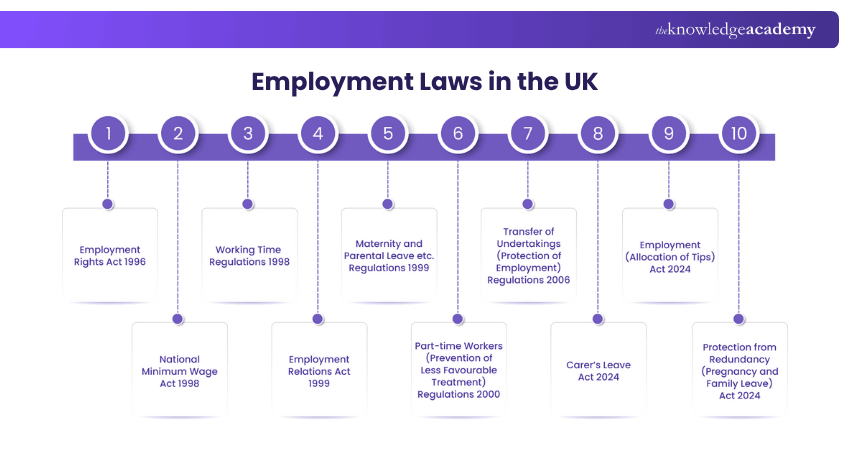
UK employment laws are comprehensive, covering a wide array of aspects such as minimum wage, working hours, discrimination, and health and safety regulations. As an expat employer, it’s vital to familiarize yourself with the following key legislations:
- National Minimum Wage Act 1998
- Employment Rights Act 1996
- Equality Act 2010
- Health and Safety at Work etc. Act 1974
Each of these acts plays a fundamental role in promoting a fair working environment, ensuring that employees are treated equitably regardless of their nationality.
The Historical Evolution of UK Employment Laws
The journey of employment laws in the UK is a testament to the country’s commitment to social justice and economic stability. Initially, these laws were heavily influenced by labor movements and industrial actions in the late 19th and early 20th centuries.
The integration with the European Union brought about a wave of changes, aligning UK employment practices with broader European standards. Post-Brexit, while the UK has retained many of these regulations, there is increased autonomy to modify laws specific to national interests.
Impact of Brexit on Employment Laws for Expats
Brexit has introduced a paradigm shift, affecting how expat employers navigate employment regulations. The freedom of movement ended, leading to new visa requirements and work permits. However, the UK government remains committed to maintaining high labor standards.
It’s crucial for expat employers to stay updated on any legislative changes post-Brexit to ensure compliance and capitalize on opportunities that arise from the evolving regulatory landscape.
Main Differences Between UK and Other Countries’ Employment Laws
Understanding the contrast between UK’s employment laws and those of other countries is essential, particularly for expat employers managing international teams.
| Aspect | UK | Other Countries |
|---|---|---|
| Working Hours | Maximum of 48 hours per week (opt-out available) | Varies, with stricter regulations in countries like France |
| Minimum Wage | Nationally regulated minimum wage | Varies widely, with some countries having no minimum wage |
| Discrimination Laws | Comprehensive protections against discrimination | Varies, with some countries offering more limited protections |
While the UK offers robust protections and regulations, each country has unique laws influenced by its socio-political context. Expat employers must navigate these differences to ensure compliance and foster a positive work culture.
Hiring Procedures and Compliance
Navigating the intricacies of hiring expat employees in the UK requires keen attention to legal mandates. With the right knowledge and preparation, you can ensure compliance and build a diverse, competent team.
Understanding the core requirements and strategic steps for legally hiring expats in the UK is crucial. This section will delve into the essentials of obtaining work permits and visas, and provide a practical guide to compliance with current UK employment laws.
Legal Requirements for Hiring Expats in the UK
Employing expats in the UK involves adhering to specific legal standards to ensure compliance with immigration and employment laws. It’s crucial to verify the right to work in the UK for each potential employee.
- Verify the candidate has the legal right to work in the UK before employment begins.
- Follow the appropriate tier of immigration rules depending on the candidate’s skill set and job role.
- Ensure compliance with the UK’s equality and discrimination laws throughout the hiring process.
Process for Obtaining Necessary Work Permits and Visas
Securing the necessary work permits and visas is a multi-step process that requires attention to detail and careful planning.
- Determine the appropriate visa type for the job role and the employee’s circumstances.
- Apply for a Certificate of Sponsorship from the Home Office.
- Assist the candidate in obtaining a visa and ensure it matches the work role.
- Register the expat worker with HM Revenue and Customs (HMRC).
“The journey of a thousand miles begins with one step.” – Lao Tzu. It’s crucial to start this process early to avoid delays and ensure compliance.
Step-by-Step Guide for Compliance with UK Hiring Laws
Staying compliant with UK employment laws while hiring expats can be a structured process. Follow these steps to maintain legal employment practices:
- Conduct a Right to Work check to confirm the expat’s legal status.
- Maintain accurate records of visas and work permits.
- Regularly update the expat’s work status with the Home Office.
- Ensure equal opportunities and avoid discrimination at all times.
- Provide the same employment rights and benefits as local employees.
Examples of Common Compliance Documents Needed
The documentation required for hiring and maintaining expat employees involves several essential documents. Below is a table of commonly required compliance documents:
| Document Type | Description |
|---|---|
| Right to Work Check | Proof of the employee’s legal right to work in the UK. |
| Certificate of Sponsorship | A unique reference number for a job role the expat is filling. |
| Visa Documentation | Valid visa confirming the expat’s permission to work in the UK. |
| Employment Contract | A legally-binding agreement outlining employment terms. |
Employment Contracts and Terms
Understanding the intricacies of employment contracts is vital for expat employers in the UK. These contracts not only define the terms of employment but also ensure compliance with UK laws.
Employment contracts in the UK are a cornerstone of the employer-employee relationship and are legally binding documents that artikel the expectations and obligations of both parties. These contracts must include specific mandatory components as per UK law.
Mandatory Components of Employment Contracts
Every employment contract in the UK must contain certain essential elements. These include the job title, description, start date, and the names of the parties involved. Employers must also clearly state the place of work and the terms related to working hours.
- Compensation: Details about salary or wages, including pay frequency and any additional benefits.
- Notice Periods: The required notice period for termination by either party.
- Disciplinary and Grievance Procedures: Information on how workplace disputes are addressed.
- Holidays and Leave: Entitlements to holidays and conditions for leave, including maternity and paternity leave.
Unique Clauses in UK Employment Contracts
Several clauses in UK employment contracts are distinctive due to specific legal requirements. For instance, the “Right to Work” clause is crucial for verifying an employee’s eligibility to work in the UK. Similarly, the “Restrictive Covenants” are designed to protect business interests by preventing employees from joining competitors or disclosing sensitive information after leaving the company.
“The clarity of contract terms can significantly reduce legal ambiguities.”
Legal Implications of Contract Breaches
Breaching an employment contract can have severe legal consequences for employers. A breach might occur if an employer fails to pay the agreed salary or does not provide the statutory minimum notice period. In such cases, the affected employee could pursue a claim for breach of contract. Employers must be vigilant in adhering to contract terms to avoid potentially costly litigation.
Below is a comparison of different types of employment contracts commonly used in the UK:
| Contract Type | Description | Key Features |
|---|---|---|
| Permanent | Indefinite duration with steady employment. | Includes full benefits and entitlements. |
| Fixed-term | Specific duration or until a project is completed. | Ends automatically when term or project ends. |
| Part-time | Reduced working hours compared to full-time. | Pro-rata benefits and entitlements. |
| Zero-hours | No guaranteed hours, work as required. | Flexibility but no obligation for work provision. |
Employee Rights and Employer Obligations
Venturing into the realm of UK employment laws as an expat employer can be likened to navigating a maze filled with pivotal rights and obligations. Understanding these regulations not only fosters a harmonious workplace but also ensures that legal compliance is maintained.
By delving into the specifics of employee rights and employer duties, you’ll discover the intricate balance that supports a fair and just working environment.
The Rights of Expat Employees under UK Law
Expat employees in the UK enjoy a range of rights designed to protect their interests and well-being. These rights are enshrined in legislation to safeguard against exploitation and unfair treatment. Critical rights include the right to a living wage, protection from unfair dismissal, and entitlement to statutory leave and working hours.
Employer Obligations to Ensure Workplace Safety
Employers are legally bound to provide a workplace that safeguards the health and safety of their employees. This involves implementing robust health and safety protocols, conducting regular risk assessments, and ensuring that employees are adequately trained to handle potential hazards. A commitment to workplace safety not only fulfills legal obligations but also enhances employee morale and productivity.
Understanding Workplace Anti-Discrimination Laws
The UK has stringent anti-discrimination laws that prohibit unfair treatment based on characteristics such as age, gender, race, disability, and sexual orientation. The Equality Act 2010 serves as the cornerstone of these protections, ensuring that the workplace remains an inclusive environment where diversity is celebrated and respected.
Ensuring Compliance with Employee Rights
Achieving compliance with employee rights requires a strategic approach that involves regular audits and continuous education. Here are actionable methods to uphold these rights:
- Conduct comprehensive training sessions on employment laws for managers and HR personnel.
- Implement a robust grievance redressal mechanism to address employee concerns swiftly.
- Regularly update company policies to align with legal amendments.
- Engage in periodic audits to assess compliance levels and rectify any discrepancies.
“Ensuring employee rights is not just a legal mandate but a moral obligation.”
Termination and Redundancy Policies
Understanding termination and redundancy policies is crucial for expat employers operating in the UK. These processes must be handled with care and precision to remain compliant with UK employment law.
In the UK, employment termination and handling redundancies require adherence to specific legal procedures. Employers must ensure they follow the correct protocols to avoid disputes and potential legal challenges.
Legal Procedures for Employee Termination
Terminating an employee’s contract in the UK isn’t as straightforward as it might seem. Employers must have a valid reason for dismissal, which could be related to conduct, capability, redundancy, or statutory restrictions. Importantly, the employer must have followed a fair procedure before making the decision to terminate.
Employers should always provide relevant warnings and a chance for the employee to improve or rectify issues, adhering to the principles of fairness and reasonableness. Missteps in this process can lead to claims of unfair dismissal, which can be costly and damaging to reputation.
Redundancy Policies and Employee Rights
The redundancy process is another area where expat employers must tread carefully. Redundancy occurs when an employee’s position is no longer required due to operational changes, often involving restructuring or downsizing.
Employees have the right to be consulted during a redundancy process, and they are entitled to redundancy pay if they have been employed for more than two years. Employers must also explore alternative employment options within the organization before making redundancies.
“Properly managing redundancy is not just about compliance, it’s about preserving trust and morale within your workforce.”
Strategies for Handling Termination Disputes
Disputes related to termination can arise from perceived unfairness or procedural lapses. To mitigate these risks, employers should maintain clear, comprehensive documentation of all employment actions and decisions.
Engaging in open dialogue with employees and considering mediation can often resolve disputes before they escalate into legal issues. It is also advisable for employers to seek legal advice when facing potential disputes or claims, ensuring they are fully prepared and informed.
Filing a Redundancy Claim
Employees who believe they have been unfairly selected for redundancy or have not received adequate compensation can file a redundancy claim. This process can be complex and requires careful navigation through UK employment tribunals.
| Step | Description |
|---|---|
| Initial Discussion | Employee should discuss their concerns with the employer first, seeking a resolution. |
| Formal Grievance | If unresolved, a formal grievance can be filed internally, following company policy. |
| Acas Early Conciliation | Employees must contact Acas before making a tribunal claim, providing an opportunity for resolution. |
| Employment Tribunal | If conciliation fails, the employee can proceed with an employment tribunal claim against the employer. |
Taxation and Benefits for Expat Employees
As an expat employer in the UK, navigating the complexities of taxation and employee benefits can be daunting. However, understanding these requirements is crucial for maintaining compliance and ensuring a satisfied workforce.
The UK has specific tax obligations and mandatory benefits that employers must adhere to, which can differ significantly from other countries. Let’s delve into these areas to equip you with the knowledge needed for effective management.
Understanding Tax Obligations for Expat Employers
In the UK, expat employers are required to comply with a range of tax obligations to ensure proper remuneration and benefits for their employees. This includes registering with HM Revenue and Customs (HMRC) and understanding the intricacies of PAYE (Pay As You Earn), which is the system used by HMRC to collect income tax and National Insurance from employees’ salaries. Failure to comply can result in
significant penalties
, making it crucial to stay informed and up-to-date with any legislative changes.
Employee Benefits Required by UK Law
UK law mandates certain benefits that all employers must provide to their employees, including expats. These benefits are designed to protect employee rights and ensure a fair working environment. Key benefits include:
- Paid Leave: Employees are entitled to at least 28 days of paid leave per year.
- Statutory Sick Pay (SSP): Employers must provide SSP to eligible employees who are unable to work due to illness.
- Workplace Pension: Enrollment in a pension scheme is mandatory for employees who meet certain criteria.
- Maternity and Paternity Leave: Paid leave is provided for new parents, ensuring support during crucial family moments.
Comparison of UK Taxation Rates with Other Countries
The following table offers a comparative look at the taxation rates between the UK and other selected countries. This highlights the unique tax landscape faced by expat employers and employees alike.
| Country | Income Tax Rate | National Insurance Equivalent |
|---|---|---|
| United Kingdom | 20% – 45% | 12% |
| United States | 10% – 37% | N/A |
| Germany | 14% – 45% | 14.6% |
| Australia | 19% – 45% | 2% |
Managing Expat Employee Benefits and Taxes Effectively
Effectively managing the benefits and tax obligations of expat employees requires a strategic approach. Consider the following methods:
- Engage with a professional tax advisor to ensure compliance with UK regulations and optimize tax efficiency.
- Utilize advanced payroll software that integrates tax and benefits management, providing a seamless and error-free process.
- Regularly review and update your benefits package to meet legal standards and remain competitive in attracting expat talent.
- Conduct training sessions with HR and payroll teams to ensure they are well-versed in the latest tax laws and benefit requirements.
Conclusion
In conclusion, understanding UK employment laws as an expat employer is not merely a legal necessity but a strategic advantage. By embracing these laws, you’re investing in the robust foundation of your enterprise and the well-being of your workforce. Let’s turn legal compliance into a catalyst for growth and harmony in your business journey.

